What does it mean to truly welcome someone into the life of the church?
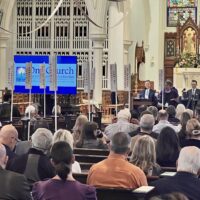
That question was at the heart of a recent conversation among clergy and lay leaders who gathered for an Invite Welcome Connect workshop last fall at St. John’s Episcopal Church in Memphis. Facilitated by Mary Foster Parmer, creator of Invite Welcome Connect (IWC), the one-day workshop brought together participants from across the Diocese of West Tennessee, representing congregations large and small. Developed by Parmer in the 2010’s, IWC is the welcome and hospitality ministry of The Episcopal Church.
What lingered well beyond the day itself was not a checklist or a program, but a deeper theological and pastoral invitation: to see welcome not as surface-level friendliness, but as a spiritual practice rooted in dignity, relationship, and shared life.
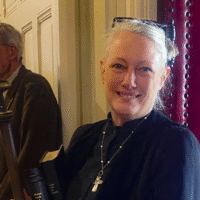
The workshop came to Memphis through the leadership of the Rev. Donna Gerold, Associate Rector at St. John’s, whose longstanding commitment to hospitality shaped the event and the conversation that followed.
For Gerold, welcome ministry is not an accessory to parish life; it is essential to the gospel itself. People can experience pain when they feel unseen or out of place, especially in spaces that should feel like home. Churches, she notes, often describe themselves as friendly, but friendliness alone is not the same as welcome.
“One of the phrases Mary [Foster Parmer] uses that really sticks,” Gerold reflected, “is the difference between being a friendly community and being a community of friends. Most churches are communities of friends, and that can unintentionally make it harder for newcomers to find their way in.”
That insight resonated across contexts, from legacy parishes to congregations with a dozen people on a Sunday morning.
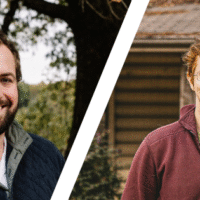
At St. Thomas the Apostle Episcopal Church in Humboldt, the Rev. Deacon Tommy Rhoads sees welcome embodied in small, attentive gestures: someone helping a visitor navigate the prayer book and hymnal, announcing page numbers clearly, or following up with a personal note after a first visit. In a small congregation like St. Thomas the Apostle, he observed, people are rarely invisible, but hospitality still requires intention.
When a young family visited St. Thomas recently, Rhoads noticed parishioners instinctively stepping in to help, not out of obligation, but care. One member quietly assisted them through the liturgy; afterward, Rhoads followed up. Not to claim them, but to honor their discernment. He even suggested other nearby Episcopal congregations that might better meet their needs, modeling a diocesan understanding of church that prioritizes people over parochialism.
That posture of mutuality, humility, and generosity echoed throughout the conversation.
At Church of the Holy Communion (Memphis), the Rev. Sarah Cowan (Associate Rector) has been engaged in strengthening hospitality practices over the past several years. Even so, she was quick to name the ongoing challenge: welcome is not a task to be completed, but a culture to be tended.
Cowan emphasized that Invite Welcome Connect succeeds because it pairs practical tools with what she called “heart work.” Communication strategies, signage, and systems matter. However, they must be grounded in prayer, relationship, and a shared sense of purpose.
She recalled launching a newcomer greeter ministry that began not with instructions, but with prayer. Greeters gathered before services to pray together, framing their role not as a job to be done, but as a ministry they were called to share. That distinction, she said, makes all the difference.
Welcome is as much inward-facing as outward-facing. It invites long-time members into renewed discipleship, calling them to notice who is missing, to reach beyond familiar circles, and to practice the sometimes-uncomfortable work of love.
Gerold spoke openly about that discomfort, especially in large, historic congregations where deep roots can unintentionally create closed loops. “Many churches say they want to grow,” she said, “but the truth is, they often like things just the way they are.” Welcome ministry, she argued, gently but persistently challenges that instinct. True welcome does not disrupt community; it expands it.
That expansion increasingly happens beyond church walls.
Gerold, Rhoads, and Cowan each shared stories of congregations in West Tennessee engaging their neighborhoods through blessing boxes, food pantries, Pride festival booths, pet blessings, chamber of commerce involvement, and simple, visible acts of care. These efforts were not framed as marketing strategies, but as expressions of presence. Ways of saying, We are here, and we care.
In that sense, welcome becomes incarnational. It mirrors the God Christians proclaim: one who shows up, takes on flesh, and dwells among us.
The conversation also surfaced a shared conviction that the pandemic, while disruptive, can no longer be an all-purpose explanation for disconnection. The deeper challenge is relational. In a world saturated with digital communication, people are often more informed but less known. Churches have an opportunity to model something different: communities where absence is noticed, joy is shared, and people are reminded that they matter.
As the discussion drew to a close, there was a palpable sense that this work is just beginning. Ideas sparked at the workshop are already taking root across the Diocese, adapted to local contexts and carried forward by people who see welcome not as a program, but as a way of being Church.
If there is a single thread that binds these stories together, it is this: authentic welcome is not about perfection, polish, or growth metrics. It is about attention. It is about relationship. And it is about the quiet, faithful work of making room, again and again, for the neighbor Christ sends our way.